
Supply chain issues may cause delays.
Click for details
Finding the right parts is one of the biggest challenges in any classic truck project. Whether you're restoring a Chevy C10, rebuilding a Ford pickup, repairing rust on an older Dodge, or updating a Jeep, the quality and fit of the parts you buy can affect nearly every stage of the project.
That is why many enthusiasts searching for a Carolina truck shop are really looking for more than a generic automotive parts store. They need a source that understands older trucks, carries application-specific components, and offers the types of hard-to-find parts that restoration projects often require.
A specialized supplier can make the process much easier. Instead of searching multiple general retailers for sheet metal, brake components, electrical parts, and exterior upgrades, builders can work from a parts source focused specifically on trucks and restoration.
Here are some of the most important things to look for when deciding where to buy parts for your project.
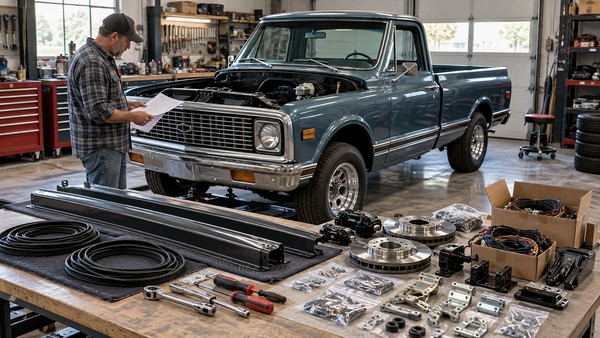
Classic trucks are different from modern vehicles.
A general parts store may be able to provide filters, spark plugs, or basic service components, but restoration projects often require much more specialized parts.
Depending on the truck, you may need:
A supplier that focuses on older trucks is much more likely to understand the differences between generations, configurations, and applications.
Carolina Classic Trucks has specialized in classic truck restoration parts since 2002 and currently offers parts for Chevy, GMC, Ford, Dodge, and Jeep applications. If you're looking for a Carolina truck shop focused on restoration and customization parts, starting with a specialist can simplify the search considerably.
One of the easiest ways to overspend during a restoration is buying exciting parts before addressing the truck's actual problems.
Before placing a large order, inspect the vehicle and divide the project into categories.
A sensible priority often looks like this:
This order isn't mandatory for every project, but safety and structural integrity should generally come before cosmetic work.
Buying wheels for a truck with rusted cab mounts or ordering a custom hood while the brakes still need a complete rebuild may make the project look more exciting temporarily, but it doesn't move the truck closer to being safely finished.
Sheet metal is one area where quality matters enormously.
Older trucks commonly develop rust in:
Cheap or poorly manufactured replacement panels can create hours of unnecessary fitting, trimming, and reshaping.
A better approach is to use panels made for the exact application whenever possible. Quality replacement sheet metal helps maintain correct body lines and makes welding, alignment, and final bodywork easier.
Owners dealing with significant corrosion can browse classic truck restoration components based on the areas of the vehicle being repaired instead of trying to fabricate every damaged section from scratch.
Before ordering sheet metal, however, remove enough trim and interior material to understand how far the rust actually extends. What appears to be one bad rocker panel can sometimes reveal floor or inner-structure corrosion once disassembly begins.
Brakes are another area where specialized knowledge matters.
Many classic trucks use combinations of front disc and rear drum brakes, while others may have been converted from their original configuration. That means the correct master cylinder, booster, proportioning valve, lines, and brake hardware need to work together.
Simply ordering a component because it physically resembles the old part can create problems.
A mismatched brake system can produce:
Before ordering brake components, identify exactly what is currently installed on the truck. Do not assume a previous owner kept the original configuration.
A supplier with dedicated brake categories can be especially helpful when restoring a truck that has already been modified several times over the years.
Wiring is often ignored because it is hidden.
That can be a mistake.
Original wiring in an older truck may have endured decades of heat, moisture, corrosion, repairs, splices, and added accessories. A truck can look fully restored while still suffering from intermittent lights, charging problems, poor grounds, or melted connectors behind the dashboard.
A complete harness replacement can make sense when:
Carolina Classic Trucks currently offers electrical components including American Autowire harnesses, giving restorers another category they can address while the truck is already apart.
Electrical work is not always the most visually exciting part of a project, but reliable wiring can make a major difference in how enjoyable the finished truck is to own.
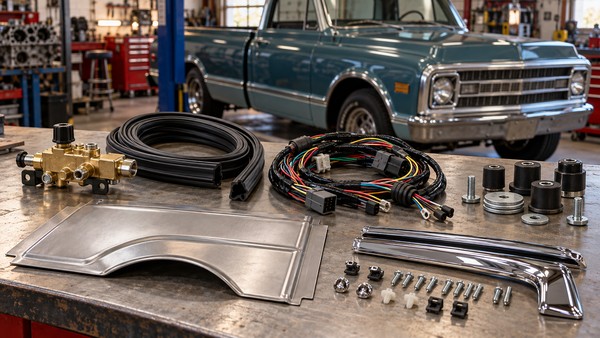
Not every classic truck owner wants a factory restoration.
Some trucks are being built as:
A useful truck-parts supplier should support more than one type of project.
For example, a restoration may require rust panels and weatherstripping, while a custom build may also include a cowl hood, modern wiring, upgraded brakes, or a one-piece window conversion.
Access to both restoration and custom truck parts makes it easier to create a build that blends original styling with modern improvements without shopping from a dozen unrelated sources.
Large body components deserve extra attention.
Hoods, fenders, beds, tailgates, and major panels can be expensive to ship, which means ordering the wrong one can create a much bigger problem than returning a small component.
Always verify:
Model-year transitions deserve particular attention.
For example, manufacturers sometimes continue an older body style into the same model year that a newer generation appears. A part described only by year may not tell the entire story.
If you're uncertain, confirm the application before completing the purchase.
Some classic truck parts are simply too large for conventional shipping.
Hoods, truck beds, and large sheet-metal components may ship by freight. When ordering oversized pieces, understand the delivery requirements before checkout.
Be prepared to inspect freight immediately.
Look for:
Follow the supplier's inspection instructions before signing for the shipment.
This can be one of the most important steps in receiving large restoration parts because freight damage is much easier to document and address at delivery than several days afterward.
Budget matters on every restoration, but the cheapest component isn't always the least expensive option once labor is considered.
A lower-priced panel that needs extensive reshaping can quickly cost more than a better-fitting part.
The same applies to:
Consider the total cost of installing and living with the part—not simply the purchase price.
Quality parts can reduce installation time, simplify adjustment, and eliminate the need to redo work later.
Organization can save almost as much time as good mechanical skills.
Before placing orders, create a project list divided by phase.
For each component, record:
This prevents duplicate purchases and reduces the chance that a project stops because one small bracket, seal, or hardware kit was forgotten.
It also helps control spending by separating parts that are truly required now from upgrades that can wait.
A good classic truck parts source should do more than offer generic automotive products. It should help builders find parts suited to older trucks, from rust repair and brake components to wiring, weatherstripping, and exterior upgrades.
The right supplier won't eliminate every challenge of a restoration, but it can make parts sourcing much more manageable.
Start by understanding exactly what your truck needs, prioritize structural and safety repairs, confirm applications carefully, and buy components that support the direction of the entire build.
Whether your goal is a factory-inspired restoration or a completely personalized cruiser, choosing the right parts from the beginning makes every stage that follows easier.
Look for a supplier that specializes in older trucks, provides application-specific components, and carries multiple restoration categories such as sheet metal, brakes, electrical parts, weatherstripping, and exterior components.
Usually not. Inspect the truck first and organize the project into phases. Buying parts according to the restoration schedule reduces unnecessary purchases and helps uncover hidden problems before you commit to large orders.
For many restoration jobs, application-specific parts are preferable because they are designed around the truck's original dimensions and mounting points. Universal components can still be useful for certain custom applications, but they may require additional fabrication.
Can't find what you need for your Classic Vehicle? Give us a call at: (336) 337-2132
