
Supply chain issues may cause delays.
Click for details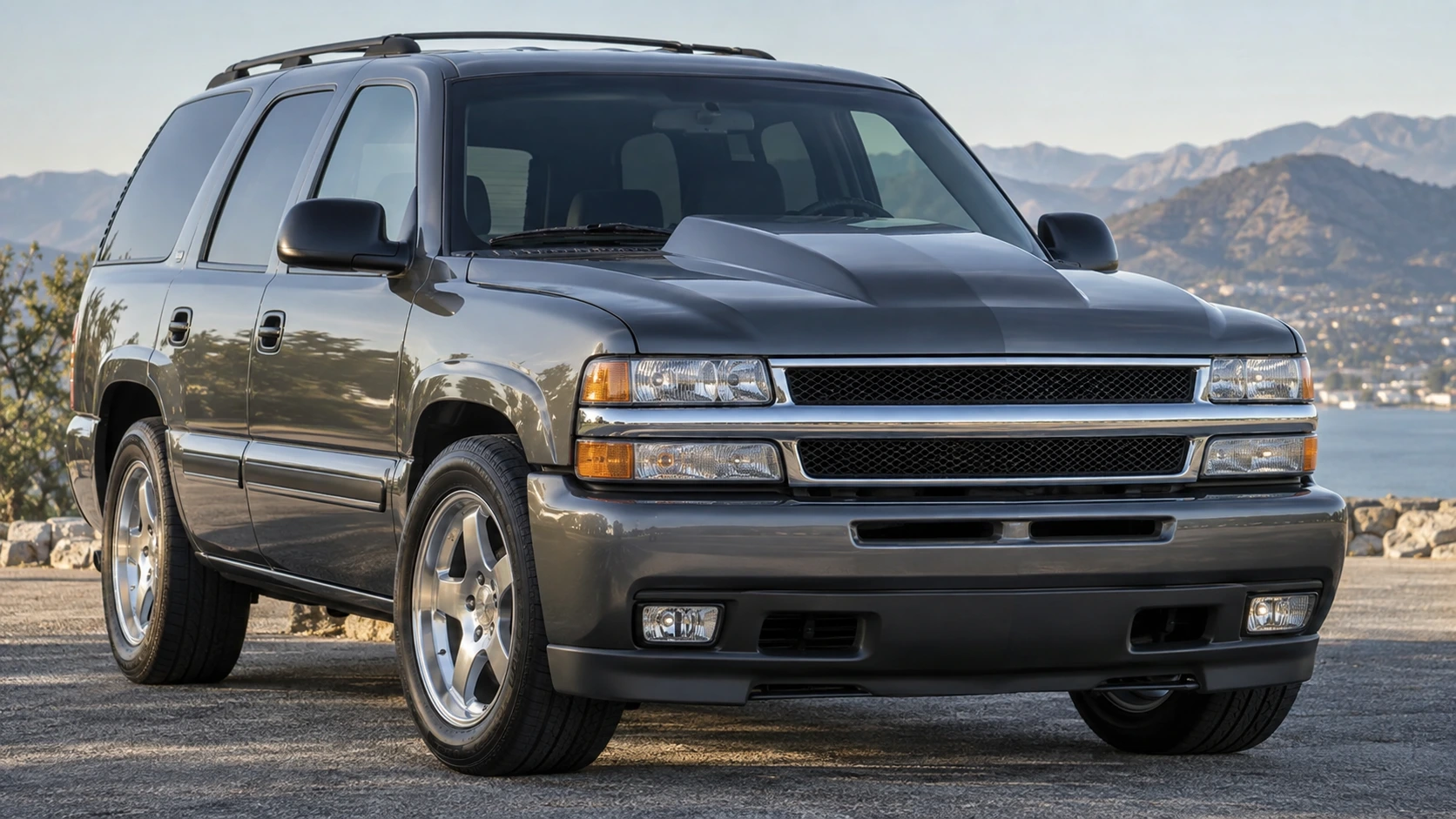
The 2002 Chevy Tahoe has a clean, simple front-end design that still looks good more than two decades later. For owners who want to give the SUV a more aggressive appearance without completely changing the grille, fenders, or bumper, a cowl hood is one of the most noticeable upgrades available.
Installing a 2002 Chevy Tahoe cowl hood can give the front end a stronger performance-inspired look while keeping the vehicle recognizable. It can work equally well on a street-driven Tahoe, a lowered SUV, a restomod, or a clean custom build.
Still, a replacement hood is not the same as installing a small accessory. Fitment, shipping, alignment, hinges, paint preparation, and the condition of the surrounding front-end components all play a role in the finished result. Before placing an order, it is worth understanding exactly what goes into choosing and installing one correctly.
The Tahoe's broad front end gives a raised center section plenty of room to work visually. A cowl hood breaks up the large flat surface of the factory panel and adds definition without requiring changes to the rest of the body.
This type of upgrade can complement:
A cowl hood also works surprisingly well on an otherwise mostly stock Tahoe. Because the hood is such a large body panel, changing it alone can alter the appearance of the entire SUV.
The linked 2002 Chevy Tahoe cowl hood is a KeyParts cowl-induction-style replacement specifically listed for the 2002 Tahoe, so owners can start with an application designed for the vehicle rather than trying to adapt a universal hood.
Not every custom Tahoe needs an extremely tall or aggressive hood.
If the SUV still has factory wheels, stock suspension, and mostly original exterior styling, a more restrained cowl design often looks more natural. It adds enough character to make the vehicle stand out without making the hood look disconnected from everything around it.
A more extensively modified Tahoe can usually support a stronger hood design.
The most important thing is proportion.
Look at the entire vehicle instead of judging the hood by itself. The raised cowl will be visible from the front, side, and driver's seat, so its size and shape affect the Tahoe's appearance from several angles.
The best custom builds usually look like all the modifications were planned together.
A cowl-induction-style hood may look performance-oriented, but appearance alone does not guarantee additional horsepower or improved airflow.
Actual performance gains depend on how the hood interacts with the engine's intake system.
Similarly, a raised hood may provide additional clearance in some areas, but that does not mean it creates the same amount of extra space everywhere beneath the panel.
Internal bracing, engine placement, and the shape of the underside all affect usable clearance.
If your Tahoe has:
Measure before ordering.
Determine exactly where the tallest engine component sits relative to the cowl rather than assuming the visible hood height will solve the issue.
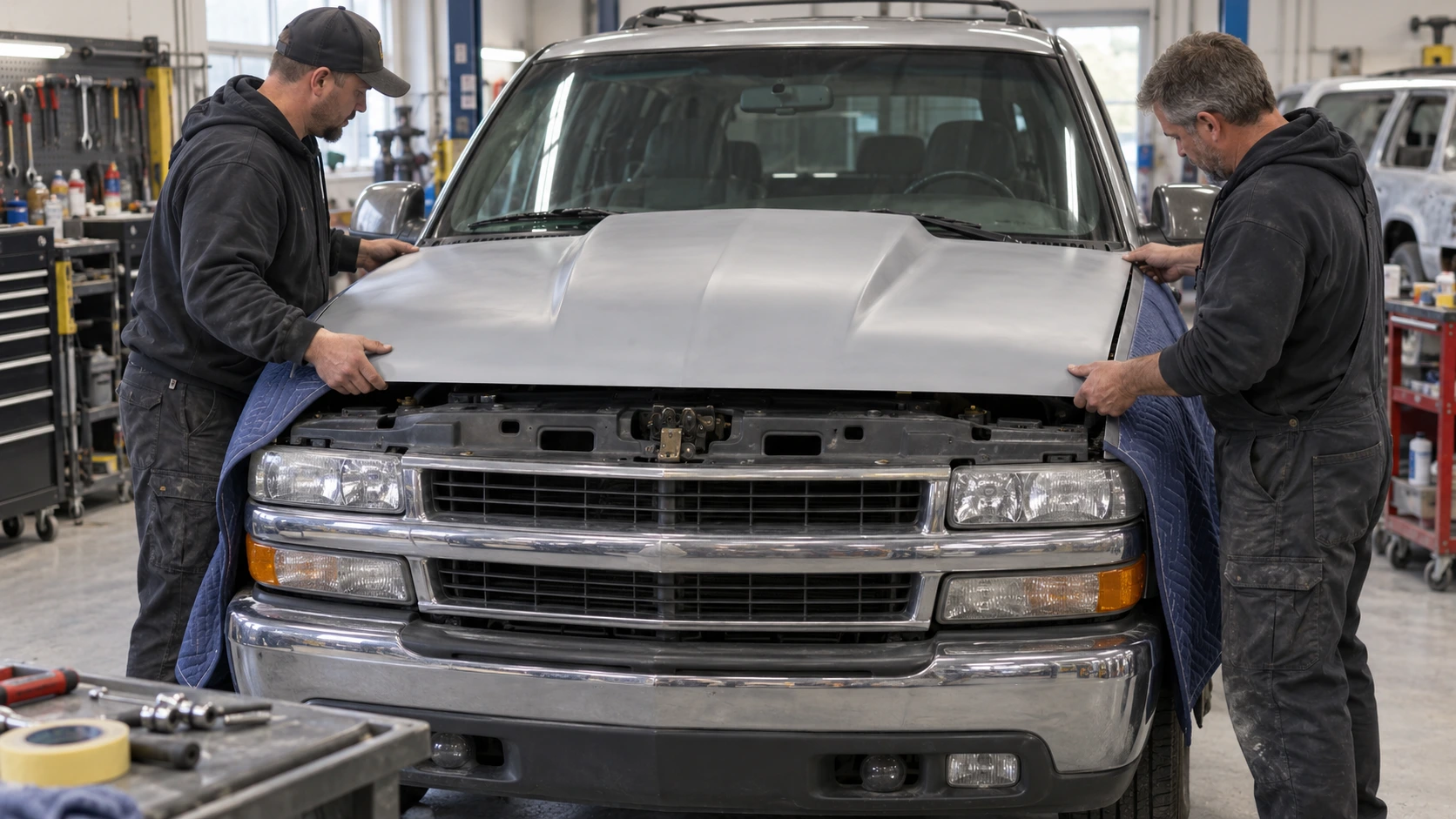
Even when a hood is listed for the correct year and model, it is smart to inspect the vehicle before ordering.
Check the condition and alignment of:
A Tahoe that has previously been involved in a collision may have surrounding panels that are slightly out of position.
That matters because a new replacement hood can expose existing alignment issues. If the current hood already sits unevenly or has poor panel gaps, determine why before assuming the replacement panel will fix everything automatically.
The linked KeyParts product lists the 2002 Tahoe among its supported applications, along with Tahoe models from 2000 through 2006.
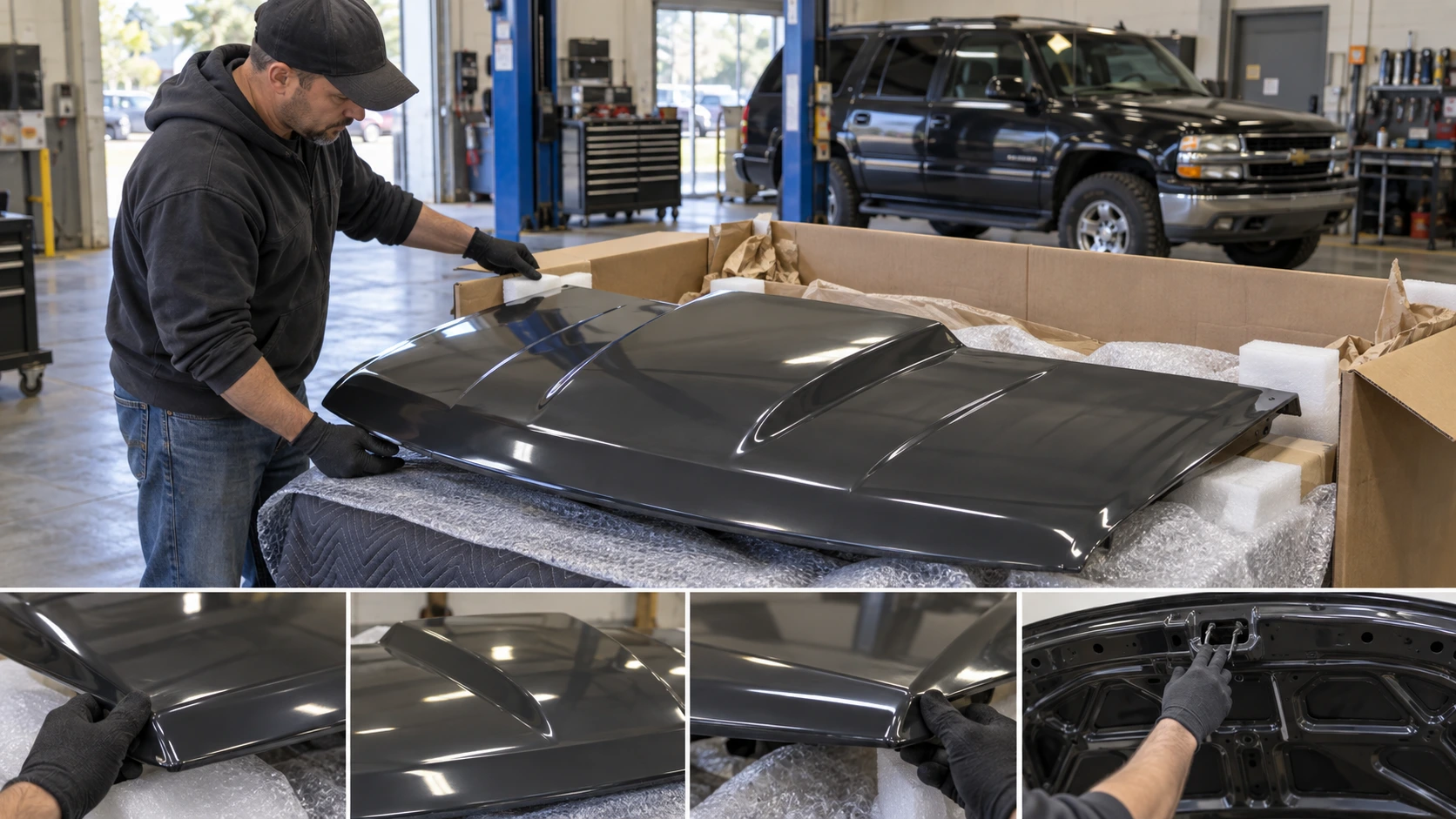
Large hoods are typically transported by truck freight rather than ordinary parcel delivery.
That makes the receiving process an important part of the purchase.
Carolina Classic Trucks specifically instructs customers to inspect truck-freight orders before signing for them. The hood should be removed from the shipping box and checked before the freight paperwork is completed.
Inspect the packaging for:
Then inspect the actual hood, paying close attention to:
If damage is present, photograph it and follow the seller's freight instructions.
A hood is too large and expensive to treat like a regular doorstep delivery. Spending a few extra minutes during inspection can prevent a much larger problem later.
Never send a replacement hood directly to paint before installing it on the Tahoe.
The first installation should be considered a test fit.
With the hood in place, inspect:
Do not force the hood closed if the latch does not line up properly.
Hood adjustment can require patience. A relatively small movement at a hinge may create a much larger change at the front edge.
Because the panel is large and awkward, having two people available for removal and installation is also a smart precaution.
Protect the fenders and cowl area before beginning.
A brand-new hood does not automatically eliminate problems caused by old hardware.
Before final installation, inspect the:
If the original hood has always been difficult to close, sits too high, or has inconsistent gaps, worn hardware could be contributing to the problem.
Repairing those components while the hood is already removed is easier than trying to correct them after the replacement has been painted.
A replacement hood should be treated as unfinished sheet metal.
Even a quality panel may need standard body-shop preparation before receiving final color.
That can include:
Let the painter determine the correct preparation method for the coating already on the panel.
You'll also need to decide how the underside should be finished. Painting it body color can create a more complete show-quality appearance, while a durable contrasting finish may make sense for a Tahoe driven regularly.
The factory paint code provides a starting point, but it does not guarantee that freshly mixed paint will perfectly match the finish currently on the SUV.
A 2002 Tahoe has had many years of exposure to:
All of these can affect how the existing color looks today.
A professional body shop may need to adjust the color or blend the adjacent fenders to make the new hood look consistent with the rest of the vehicle.
Metallic finishes can be particularly sensitive to differences in paint application.
A new hood naturally attracts attention to surrounding components.
Inspect the:
You do not need to replace everything simply because you're installing a new hood. Often, cleaning, restoring, or adjusting existing components is enough to make the front end look significantly better.
If you're considering additional custom truck parts, try to keep the upgrades consistent with the Tahoe's overall direction rather than adding unrelated modifications one at a time.
For owners who want a noticeable exterior change without completely redesigning the SUV, a cowl hood can be an excellent choice.
It preserves the recognizable 2002 Tahoe front end while adding more shape and a stronger performance-oriented appearance.
The best results come from handling the project like a body-panel replacement rather than a quick bolt-on accessory. Verify fitment, inspect freight carefully, test-fit the hood before paint, address worn hinges or latch hardware, and allow time for proper finishing.
Done correctly, a 2002 Chevy Tahoe cowl hood can give an already popular full-size SUV a much more distinctive look while still appearing like it belongs on the vehicle.
An application-specific replacement hood is designed around the intended vehicle, but the original hinges and latch should still be inspected before installation. Worn or damaged hardware can affect alignment even when the hood itself is correct.
Not automatically. Any performance benefit depends on whether the hood design and engine intake system are configured to work together. Many owners install cowl hoods primarily for appearance or additional underhood clearance.
No. Always test-fit a replacement hood before final paint. This allows you to adjust hinges, panel gaps, hood height, and latch alignment without risking damage to a freshly painted surface.
Can't find what you need for your Classic Vehicle? Give us a call at: (336) 337-2132
