
Supply chain issues may cause delays.
Click for details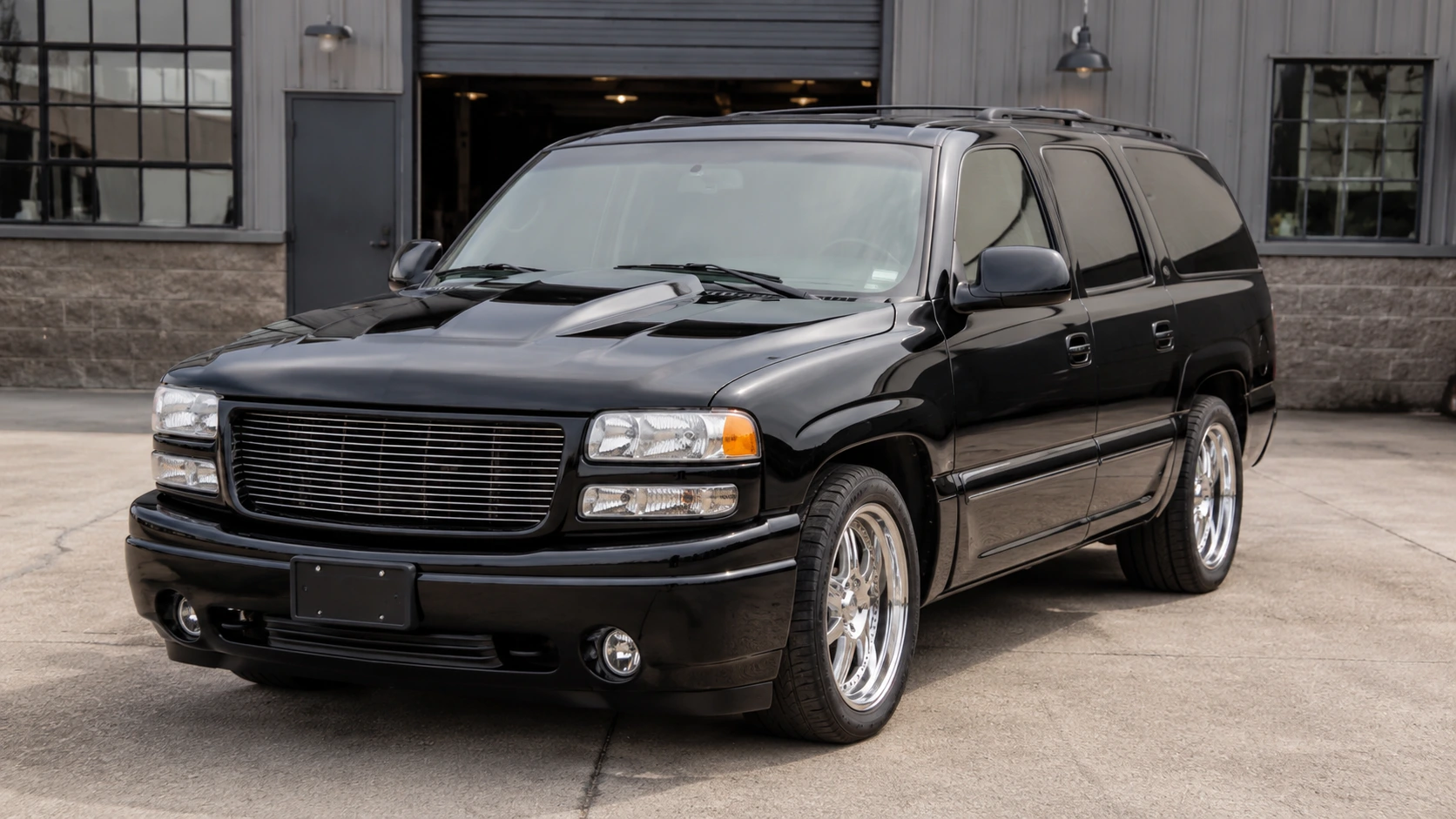
The GMC Yukon has always blended truck-based capability with the comfort and practicality of a full-size SUV. By 2004, the Yukon already had a bold front-end design, but owners looking to give their SUV a more aggressive appearance have another option: replacing the factory hood with a cowl-induction design.
Choosing a 2004 GMC Yukon hood is about more than appearance. A replacement hood is one of the largest exterior panels on the vehicle, so proper fitment, alignment, shipping, installation, and paint preparation all matter. Unlike installing a small accessory, swapping a hood requires careful planning if you want the finished result to look like it belongs on the Yukon.
Whether your original hood is damaged or you're simply ready for a more customized look, here's what to consider before making the change.
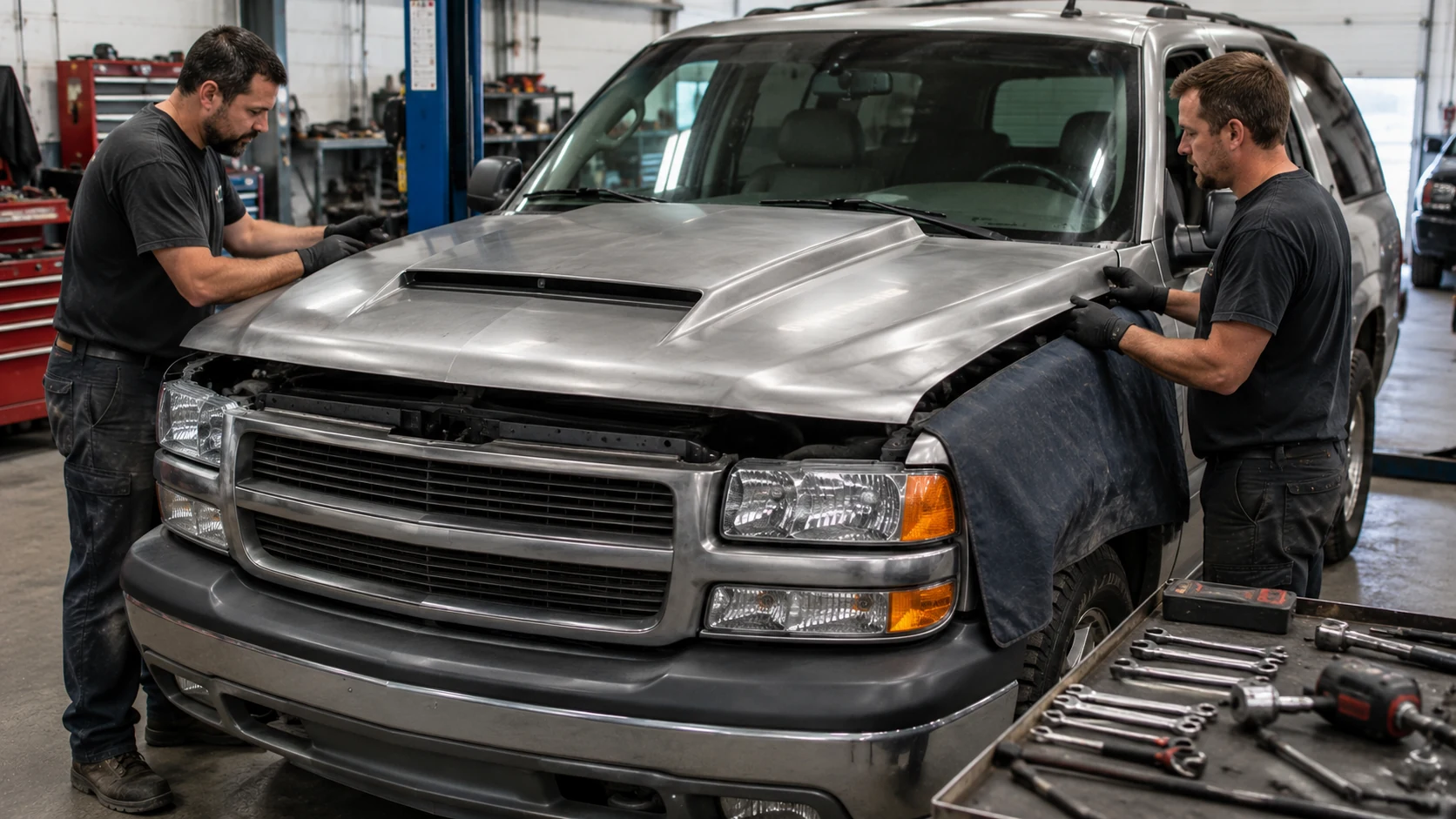
For most Yukon owners, the main reason to install a cowl hood is styling.
The factory hood is relatively clean and understated. A raised cowl adds definition through the center of the panel and gives the entire front end a stronger performance-inspired appearance.
A cowl hood can work especially well on a Yukon that already has:
It can also work on an otherwise mostly stock Yukon. Because the hood is such a large visual element, replacing it alone can significantly alter the SUV's character without requiring a full exterior makeover.
Owners considering a 2004 GMC Yukon hood can use an application-specific replacement rather than trying to adapt a universal-style panel.
A cowl-induction hood uses a raised center section extending toward the windshield. On classic muscle cars and performance vehicles, cowl designs were traditionally associated with airflow and engine clearance.
On a modernized truck or SUV build, the cowl is often chosen primarily because of its appearance.
The raised center section can make a large vehicle such as the Yukon look lower, wider, and more aggressive from the front. It also adds more shape when viewing the SUV from the side.
That doesn't mean every Yukon needs the tallest possible cowl. The hood should complement the proportions of the vehicle.
For a relatively mild street build, a restrained cowl often looks more natural than an oversized design.
Never order a large replacement body panel based only on a photograph.
Before purchasing a hood, confirm:
This is particularly important if the Yukon has been involved in a previous collision or received replacement body panels. Even a hood designed for the correct vehicle may be difficult to align if the surrounding sheet metal is already out of position.
The linked replacement is specifically intended for applications including the 2004 Yukon, but it is still smart to confirm your individual vehicle before placing the order.
If there is anything unusual about the SUV's front end, ask about fitment first rather than discovering a problem after freight delivery.
Possibly, but don't buy one based solely on the assumption that a raised cowl automatically creates a specific amount of usable room underneath.
The exterior shape is only part of the hood.
Internal bracing also affects available clearance. If the Yukon has an engine swap, modified intake, supercharger, or another component requiring extra space, measurements should be taken before ordering.
Measure the highest engine component relative to the current hood and determine where that component would sit beneath the cowl.
When clearance is critical, ask for information about the underside of the exact replacement hood rather than relying on the appearance of the raised section.
Steel replacement hoods are a practical option for SUVs that will continue seeing regular road use.
They have several advantages:
Steel also provides the substantial feel many owners expect when opening and closing the hood of a full-size SUV.
However, a steel replacement hood should still be viewed as an unfinished body panel.
It will need to be inspected, test-fitted, adjusted, and properly prepared before receiving final paint.
A hood is much larger than something that can simply arrive on your doorstep in a standard delivery box. Large sheet-metal panels are commonly transported by truck freight.
That makes delivery inspection extremely important.
Before accepting the shipment, examine the packaging for:
Follow the seller's freight inspection requirements carefully. If the shipment needs to be opened before signing, do so.
Pay close attention to the actual hood's:
Take photos if anything appears questionable.
Receiving a large body panel is one time when you don't want to rush through the delivery process.
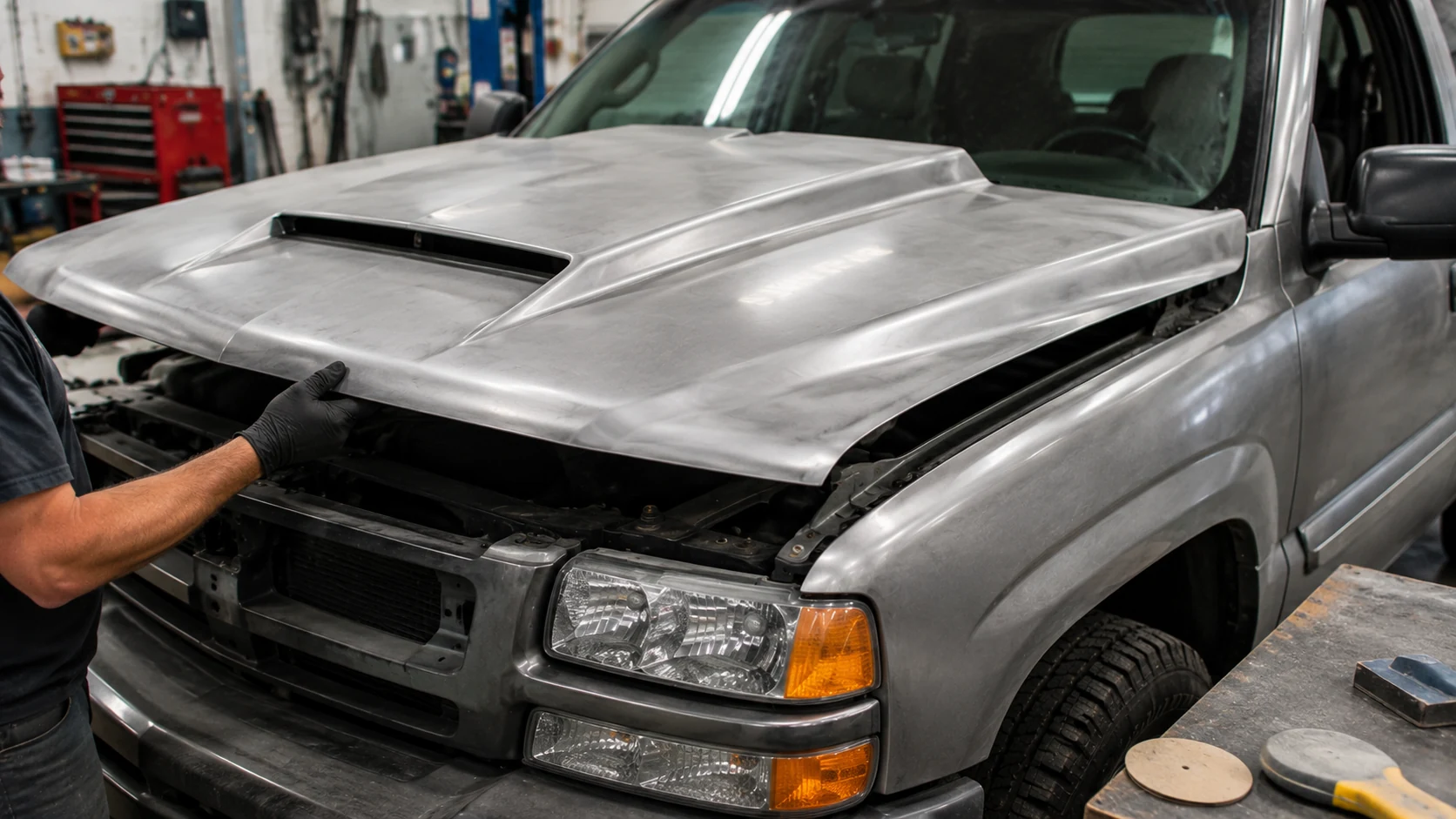
One of the biggest mistakes you can make is sending a new hood directly to the paint shop without first installing it on the Yukon.
Test-fitting allows you to identify alignment problems while the panel is still unfinished.
Install the hood and inspect:
Do not force the hood shut if the latch isn't aligned.
A small adjustment at the hinge can create a major change at the opposite end of such a large panel.
It is also easier to install and remove a hood with two people. Protect the fenders and cowl area so an accidental movement doesn't damage surrounding paint.
A new hood won't compensate for worn supporting hardware.
Before installation, inspect the:
Loose or worn hinges can create uneven gaps and make the hood appear to fit incorrectly.
If the original hood has been opening poorly, sitting unevenly, or requiring extra force to latch, diagnose those problems before installing the replacement.
Replacing or servicing questionable hardware while the hood is already removed is much easier than revisiting it later.
A replacement hood isn't normally ready for final color immediately after delivery.
After test-fitting, a body shop may need to perform normal preparation such as:
Talk with your painter before altering any coating already on the hood. The correct process depends on the panel's existing finish and the products the shop intends to use.
You'll also need to decide how the underside should look. Painting it body color creates a finished appearance when the hood is open, while other durable finishes may be appropriate for a regularly driven Yukon.
If the Yukon is receiving a complete repaint, matching the hood isn't much of a concern.
If only the hood is being painted, things become more complicated.
The original finish has had more than two decades of exposure to sunlight and weather. Even a well-maintained vehicle may no longer match the exact appearance of fresh paint mixed solely from the factory color code.
Previous body repairs can create additional variation.
A professional painter can compare the existing finish and determine whether adjacent fenders need blending to make the transition less noticeable.
Metallic colors require particularly careful matching because changes in application can alter how the paint reflects light.
A cowl hood immediately draws attention to the upper portion of the Yukon's front end.
Once installed, worn surrounding components may become more noticeable.
Take the opportunity to inspect:
You don't need to replace everything. In many cases, cleaning, restoring, or properly aligning existing components is enough.
Owners comparing additional custom truck parts should think about the finished vehicle rather than adding modifications one at a time with no overall plan.
A coordinated Yukon generally looks better than one with several unrelated custom pieces competing for attention.
Before starting the project, watch for these common mistakes:
Most of these problems are preventable with careful planning.
For owners who want their SUV to stand apart from a stock 2004 Yukon, a cowl hood can make a major difference.
It changes one large panel while leaving the fundamental design of the vehicle intact. That makes it a good option for owners who want a noticeable exterior modification without redesigning the entire front end.
The best results come from choosing the correct application, inspecting the hood carefully when it arrives, test-fitting everything before paint, and taking time with final alignment.
Handled correctly, a new 2004 GMC Yukon hood can give an already substantial SUV a more distinctive appearance while still looking like a natural part of the vehicle.
Application-specific steel hoods are generally designed around the vehicle's existing mounting system, but you should always verify the requirements for the exact hood. Inspect the hinges and latch before installation as well.
Not automatically. Many cowl hoods are installed primarily for appearance or additional clearance. Performance benefits depend on whether the hood and intake system are specifically designed to work together.
No. Test-fit and adjust the hood first. Once fitment, panel gaps, hinges, and latch operation have been confirmed, remove it for final bodywork and paint.
Can't find what you need for your Classic Vehicle? Give us a call at: (336) 337-2132
